
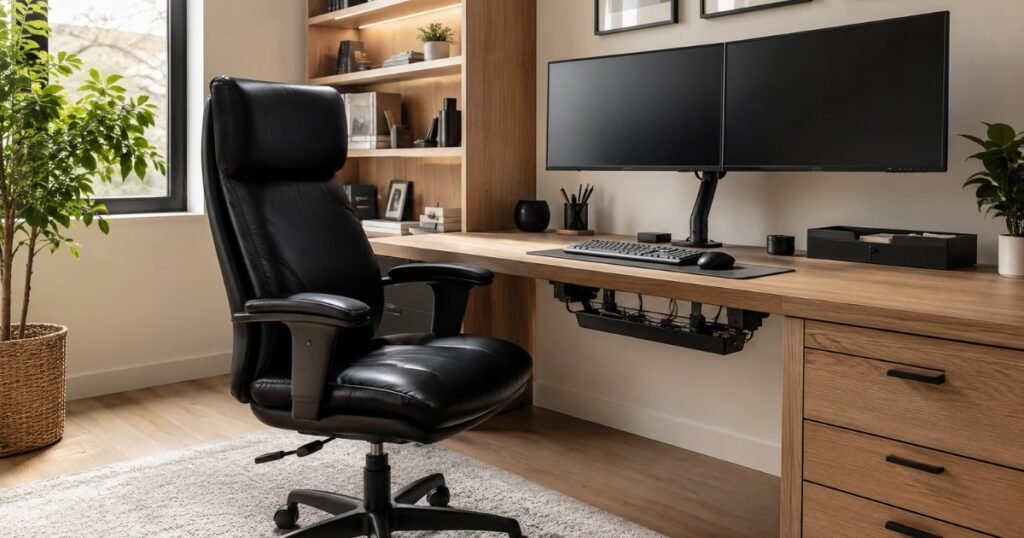
Spending eight or more hours at a desk quickly reveals whether your chair is actually comfortable. Back pain, stiff shoulders, and constant fidgeting often have less to do with long workdays than with poor support. That’s why a leather office chair is a popular upgrade—it offers a more professional look, longer-lasting materials, and better comfort than many basic mesh or fabric chairs.
Some stay in excellent condition for years, while others begin cracking or peeling much sooner than expected. Even a premium-looking chair can become uncomfortable if it lacks proper lumbar support or doesn’t fit your workspace.
This guide covers what really matters when buying a leather office chair, from understanding leather quality and ergonomic features to choosing the right size, budget, and design. You’ll also learn which common buying mistakes to avoid, making it easier to invest in a chair that stays comfortable for years—not just during the first week.
Overview: The Quick Answer
The best leather office chair for you depends on your desk size, how many hours you sit each day, and how much upkeep you’re willing to do.
- Small desk or home office → a mid-back leather chair with flip-up or slim adjustable arms
- Long workdays (7+ hours) → an ergonomic leather chair with adjustable lumbar support and seat depth
- Priority is durability → top-grain leather, which resists cracking and peeling far longer than lower-grade materials
- Budget-conscious but still want a clean look → high-quality eco leather, which is easier to maintain than genuine leather at a lower price
- What to avoid → bonded leather, if you want the chair to still look good in two or three years
Everything below expands on these points so you can match a chair to your specific setup rather than picking based on price or appearance alone.
Match Your Leather Office Chair to Your Workspace
A leather office chair that feels perfect in a large executive office may overwhelm a small home office, while a compact chair can feel underwhelming in a larger room. Matching the chair to your space and daily routine usually leads to a better long-term choice.
Best for Small Home Offices
Space is often the biggest limitation in a home office. An oversized executive chair may look impressive, but it can crowd the room and stay in the way when not in use. A mid-back leather office chair with a smaller base and flip-up arms keeps the workspace feeling open while still providing the support most people need for daily work.
Best for Executive Offices
Extra space gives you more flexibility when choosing an office chair. A high-back leather office chair adds a classic executive look while offering better head and upper-back support for longer work sessions. The trade-off is its larger footprint, so make sure your office has enough room before choosing this style.
Best for Long Workdays
Long workdays put every part of a chair to the test. Features like adjustable lumbar support, seat depth, and recline tension have a much bigger impact on all-day comfort than leather quality alone. A chair that fits your body well will usually feel better after eight hours than one chosen mainly for its appearance.
Best for Budget Buyers
Eco leather or high-quality PU leather chairs deliver a similar look to genuine leather at a lower price point, with the trade-off being a shorter lifespan under heavy daily use.
Key buying priorities, in order: workspace size, daily sitting time, budget, then appearance.
| Buyer Type | Recommended Chair Style | Why It Works |
|---|---|---|
| Small home office | Mid-back, flip-up arms | Compact footprint, easy to tuck under desk |
| Executive/private office | High-back with headrest | More support, traditional look, needs more space |
| Long workday (7+ hrs) | Ergonomic mid-back with adjustable lumbar | Prioritizes comfort over style |
| Tight budget | Eco leather, mid-back | Lower cost, easier maintenance than genuine leather |
Most impressive-looking chair they can afford, only to realize a few weeks in that it barely fits under their desk. Sizing up isn’t always the upgrade it seems — matching the chair to the room usually pays off more than matching it to a showroom photo.
Not All Leather Is Created Equal
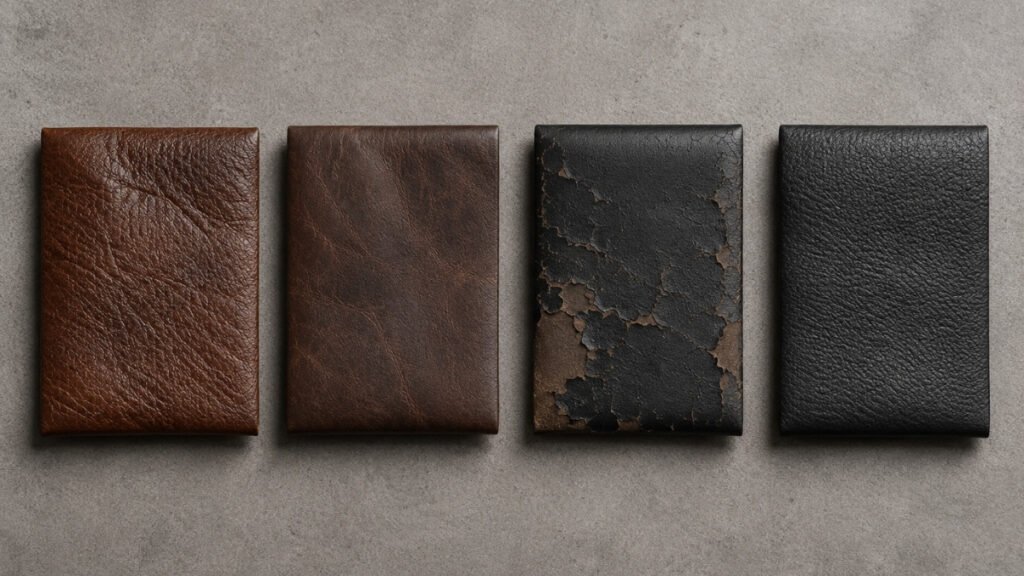
Some stay soft and durable for years, while others begin cracking or peeling after relatively short daily use. Understanding these differences before you buy makes it much easier to choose a chair that’s built to last instead of one that only looks good when it’s new.
Top-Grain vs. Genuine Leather
Top-grain leather is sanded and refinished for a consistent, durable surface — it’s what you’ll find on most higher-end office chairs. Genuine leather is technically real leather too, but the term is often used loosely on lower layers of hide that don’t hold up nearly as well.
Why Bonded Leather Peels So Quickly
Bonded leather is made from scraps of leather fiber glued to a fabric backing, then coated in polyurethane. It looks convincing when new, but that coating is what actually touches your arms and back every day — and it’s prone to cracking and peeling within a year or two, especially in a warm room or under direct sun.
Eco Leather vs. PU Leather
Eco leather is a more durable, often plant-based synthetic designed to resist cracking better than standard PU leather. It’s a reasonable middle ground if you want a clean look without the price of top-grain leather.
| Material | Durability | Breathability | Maintenance | Typical Lifespan |
|---|---|---|---|---|
| Full-grain leather | Excellent | Moderate | Low | 10+ years |
| Top-grain leather | Very good | Moderate | Low | 7–10 years |
| Genuine leather (lower layers) | Fair | Low | Moderate | 3–5 years |
| Eco leather | Good | Moderate-High | Low | 4–6 years |
| PU/faux leather | Fair | Low | Moderate | 2–4 years |
| Bonded leather | Poor | Low | High | 1–2 years |
Without checking which type it actually is. A quick look at the product description or material spec sheet before buying saves a lot of frustration a year later. If you’re setting up the rest of your desk at the same time, a good desk mat can also protect the surface underneath from any leather conditioner or cleaning products you use down the line.
Key takeaway: Material quality affects durability far more than brand marketing.
Ergonomic Features That Matter During Long Workdays
Comfort isn’t determined by leather alone. Once you’re sitting for six or eight hours, ergonomic adjustments become the features you’ll notice every single day. That’s where a well-designed chair separates itself from one that simply looks expensive.
The 90-Degree Sitting Rule
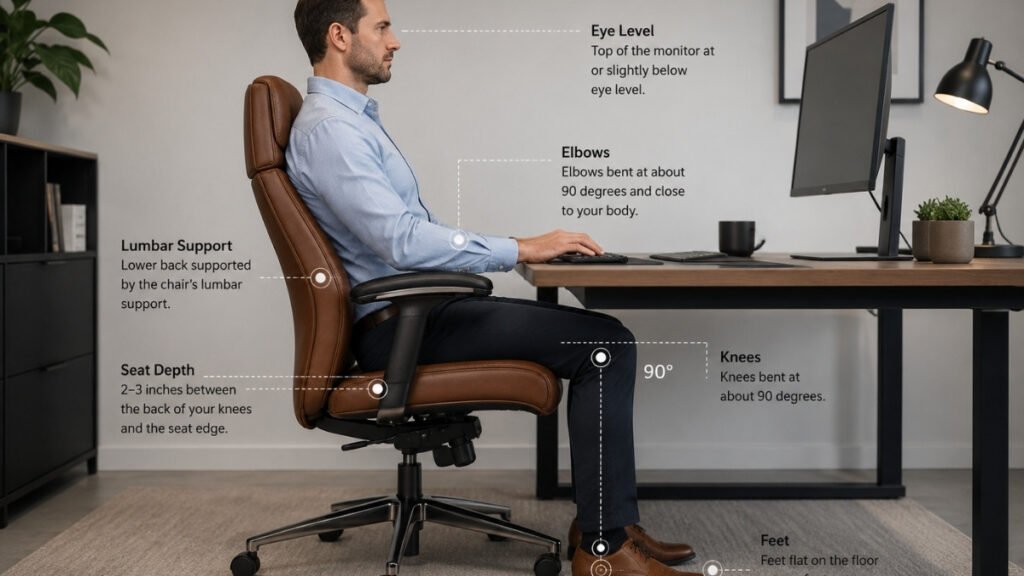
Your hips, knees, and elbows should all sit close to a 90-degree angle when you’re working. If your chair doesn’t adjust for height and seat depth, you can’t hit this position no matter how good the leather feels.
Adjustable Armrests
Fixed armrests are one of the most common reasons a chair ends up feeling wrong — they either sit too high and push your shoulders up, or too low to support your forearms. Adjustable or flip-up arms solve both problems and also help the chair fit under smaller desks.
Lumbar Support Essentials
Adjustable lumbar support (rather than a fixed curve) lets the chair match your actual lower back rather than an average body shape. This is one of the biggest differentiators between an entry-level and a genuinely ergonomic chair.
Ergonomic Adjustment Checklist:
- [ ] Seat height lets your feet sit flat on the floor
- [ ] Seat depth leaves 2–4 fingers of space behind your knees
- [ ] Lumbar support sits at your lower back, not your mid-back
- [ ] Armrests support your forearms without raising your shoulders
- [ ] Recline tension holds your preferred angle without excessive rocking
- [ ] Weight capacity matches or exceeds your body weight with a margin
It’s surprisingly common for people to be drawn to the most visually striking executive chair on the page, then realize months later it has no seat depth adjustment or lumbar control at all. Style and ergonomics don’t always come in the same package, and it’s worth checking the spec list, not just the photos, before deciding. Pairing your chair with a footrest for desk setups can also help if your desk height isn’t fully adjustable.
Measure Before You Buy: Make Sure Your Chair Fits Your Desk
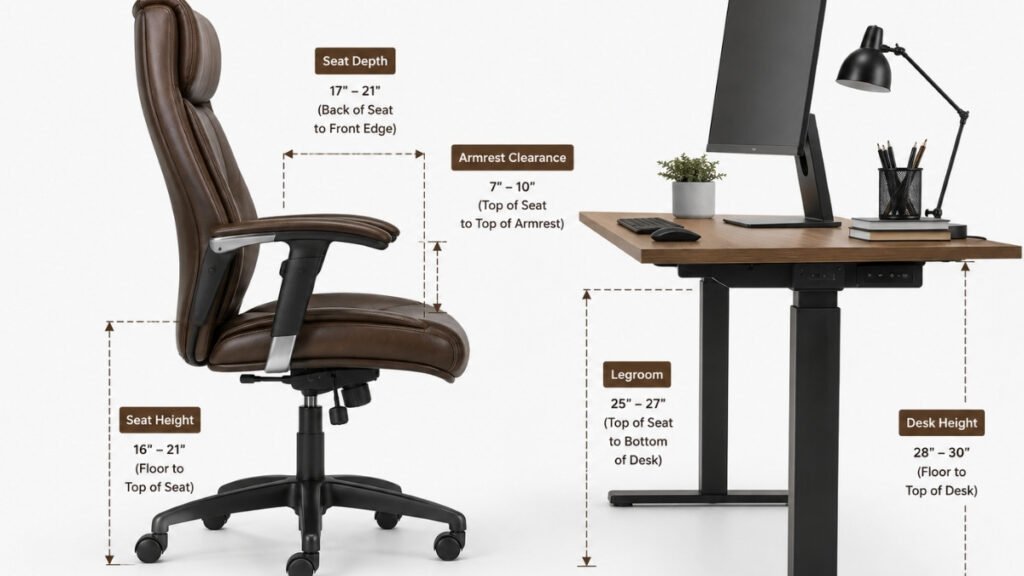
It’s surprisingly common to discover that the armrests sit too high, the base is too wide, or the chair won’t slide fully under the desk after it arrives. Taking a few measurements before buying only takes a minute and can save you from an expensive return.
Measuring Seat Depth
Sit back in a comparable chair (or measure your current one) from the back of the seat to just behind your knees. Most people fall between 17–20 inches, but taller or shorter frames may need an adjustable-depth seat.
Measuring Desk Clearance
Measure from the floor to the underside of your desk. Then check the chair’s armrest height at its lowest setting — if the armrests are taller than your desk clearance, the chair won’t slide under.
Armrests and Desk Height
A chair with tall, fixed armrests can leave a visible gap under the desk when not in use, which adds clutter to an otherwise clean setup.
Desk Compatibility Checklist:
- [ ] Measure desk underside clearance (floor to desk bottom)
- [ ] Check chair armrest height at lowest setting
- [ ] Confirm seat depth matches your leg length
- [ ] Measure available floor space for the chair’s base and wheels
- [ ] Check wheel type matches your flooring (hardwood vs. carpet casters)
A practical tip here: if you’re between sizes on seat depth or your desk clearance is tight, prioritize a chair with flip-up arms over one with fixed arms — it solves the fit problem without giving up support entirely.
How Leather Chairs Affect Desk Organization and Workspace Efficiency
If it’s too large, it can block drawers, bump into shelves, or make it difficult to move freely around the desk. A chair that’s properly sized often makes the whole workspace feel more comfortable and easier to use.
Small Desk Setups
In a compact home office, a high-back executive chair can dominate the visual space and make the room feel smaller, even if the desk itself is well organized. A mid-back chair keeps the sightline open.
Cable Management Considerations
Wide armrests or a large base can interfere with cables running along the floor or under the desk, especially in setups using a keyboard tray that already reduces under-desk space.
Matching Chair Size to Desk Size
| Feature | Mid-Back Chair | High-Back Chair |
|---|---|---|
| Floor footprint | Smaller | Larger |
| Fits under desk when idle | Usually yes | Often no |
| Best for | Small/medium desks | Larger private offices |
| Visual weight in room | Lighter | Heavier |
| Headrest included | Rarely | Usually |
Oversized executive chair blocking a walkway or forcing a desk to be pushed further from a wall than intended. It’s a small thing that adds up — over time, that a properly sized mid-back chair actually improved their workspace flow more than any organizer or accessory did.
Best Leather Office Chairs by Budget and Workspace
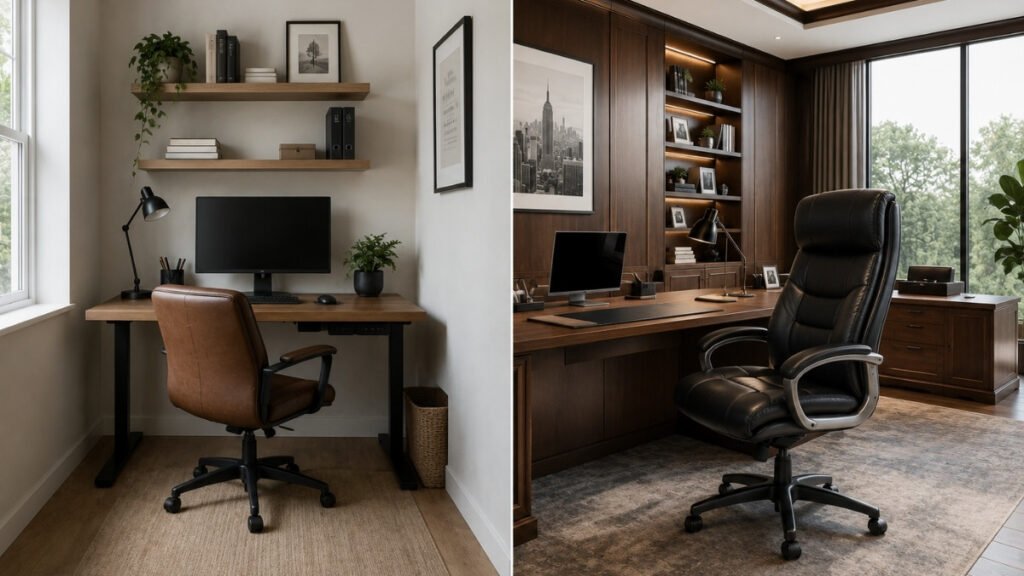
A chair that fits your budget, workspace, and daily routine will usually be a better long-term choice than paying extra for features you’ll rarely use.
| Budget Tier | Price Range | Best For | What to Expect |
|---|---|---|---|
| Budget | Under $300 | Light daily use, home office | Eco leather or PU leather, basic adjustability |
| Mid-Range | $300–$600 | Full-time remote work | Top-grain or high-quality eco leather, adjustable lumbar |
| Premium | $600+ | Long hours, executive use | Full-grain or top-grain leather, extensive ergonomic adjustment |
Best Budget Pick: Look for eco leather with at least seat height and armrest adjustment — this covers the basics without the price jump of genuine leather.
Best Mid-Range Pick: Top-grain leather with adjustable lumbar support and seat depth hits the best balance of durability and ergonomics for daily full-time use.
Best Premium Pick: Full-grain leather chairs from established ergonomic brands offer the longest lifespan and the most adjustment points, but the price difference only pays off if you’re sitting in it most of the day, most days of the week.
Best for Small Spaces: A mid-back chair with flip-up arms and a compact five-star base.
Best Executive Chair: A high-back top-grain leather chair with a headrest, reserved for larger offices where floor space isn’t a constraint.
One thing worth considering: a well-maintained used premium chair can sometimes outperform a brand-new budget model, since higher-end frames and mechanisms are often built to be serviced rather than replaced. It’s worth checking resale listings if your budget sits right at the edge between tiers.
Leather Office Chair Maintenance and Cleaning Tips
Everyday dust, body oils, and spilled drinks gradually take their toll. Simple cleaning and occasional conditioning help prevent the surface from drying out, cracking, or wearing unevenly over time.
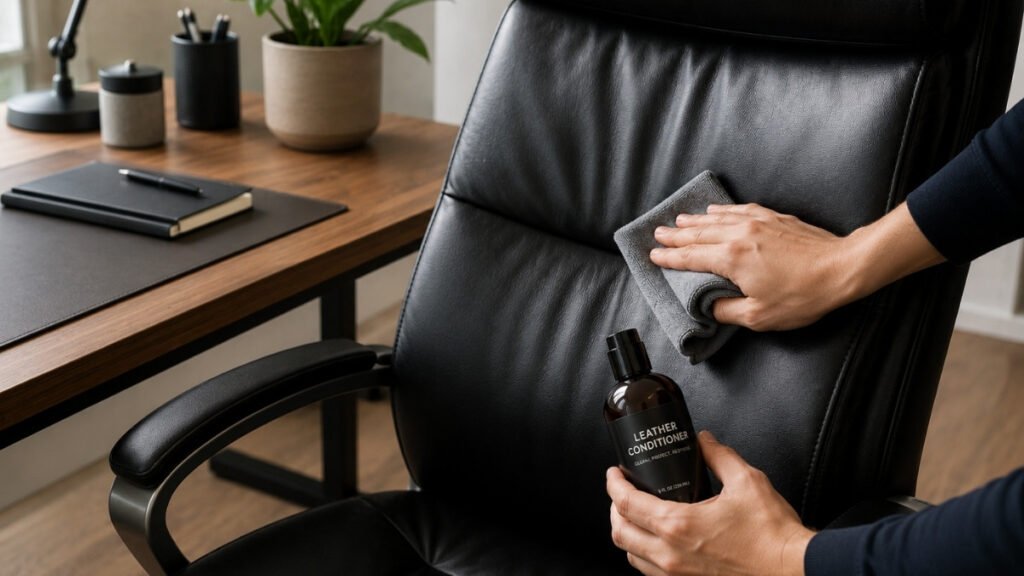
Weekly Cleaning Routine
Wipe the seat and armrests down with a slightly damp microfiber cloth to remove dust and oils from daily contact. Avoid anything abrasive, which can dull the surface over time.
Preventing Leather Damage
Keep the chair out of direct sunlight where possible, since UV exposure is one of the main causes of cracking in genuine and top-grain leather. Clean spills immediately rather than letting them sit.
Caring for Eco Leather
Eco and PU leather don’t need conditioning the way genuine leather does, but they still benefit from a gentle wipe-down to prevent dust buildup in seams and stitching.
Monthly Maintenance Checklist:
- [ ] Wipe down all leather surfaces with a damp microfiber cloth
- [ ] Apply leather conditioner to genuine or top-grain leather (skip for eco/PU)
- [ ] Check for early signs of cracking near high-contact areas
- [ ] Tighten any loose bolts or reclining mechanisms
- [ ] Vacuum crevices and seams to prevent dust and debris buildup
People with peeling bonded leather chairs often describe a frustrating cycle — small flakes constantly shedding onto the floor and desk area no matter how often they clean. It’s one of the clearest signs that a chair has reached the end of its usable life rather than something a cleaning routine can fix.
Frequently Asked Questions
Why is it so difficult to find a 100% genuine leather office chair today? Manufacturing costs and demand for lower price points have pushed many brands toward eco leather, PU leather, and bonded leather instead. Genuine and full-grain leather chairs still exist, but they’re concentrated in the mid-to-premium price tiers rather than budget lines. If full leather matters to you, check the material spec directly rather than relying on the product title.
What are the best genuine leather office chairs on a budget? True genuine or top-grain leather rarely appears under $300. At lower budgets, eco leather is the closest practical alternative — it offers a similar look and feel with better durability than PU or bonded leather at the same price point.
How long do bonded leather office chairs usually last, and are they worth buying? Most bonded leather chairs start showing cracking or peeling within one to two years of regular use. They can be a reasonable short-term option for light, occasional use, but they’re not a good fit if you’re sitting in the chair daily or want it to last.
Which new leather office chairs are best for big and tall users? Look for chairs specifically rated for a higher weight capacity (300 lbs or more) with a reinforced frame and wider seat pan. Top-grain or full-grain leather is preferable here, since the material sees more stress under higher loads.
What are the best brown leather office chairs that combine style and ergonomic comfort? Brown top-grain leather chairs with adjustable lumbar support, seat depth, and armrests offer the best combination of a classic look and everyday comfort. Prioritize the ergonomic spec list first, then narrow down by finish and tone.
Are leather versions of premium ergonomic chairs like Steelcase or Haworth worth the extra cost? For people sitting 7+ hours a day, the extended warranty, adjustability, and build quality of these premium chairs often justify the price over the life of the chair. For lighter or occasional use, a mid-range ergonomic leather chair usually delivers comparable day-to-day comfort at a fraction of the cost.
Do leather office chairs get hot and sweaty in summer? How can you make them more comfortable? Leather is less breathable than mesh, so warmer months can feel less comfortable, especially with PU or bonded leather. A breathable seat cushion or cover, along with keeping the chair out of direct sun, helps reduce heat buildup without giving up the leather look.
Is buying a used or refurbished premium leather office chair worth it, and what should you check before purchasing? It can be, especially for full-grain or top-grain leather chairs built to be serviced. Check the leather for cracking, test all adjustment mechanisms, and confirm the recline and tilt-lock functions still hold tension before buying.
Final Thoughts
The best leather office chair isn’t the one that looks the most impressive in a product photo — it’s the one that matches your leather quality expectations, supports your body through a full workday, and actually fits the space you’re working in. Balancing material, ergonomics, and workspace compatibility will get you a chair you’re still happy with years from now, rather than one you’re already second-guessing after a few months.
🏠 Behind This Guide
Buying a leather office chair sounds simple until you start comparing dozens of models that look almost identical. The biggest differences usually aren’t obvious in product photos—they show up after weeks or months of everyday use.
This guide focuses on the factors that make the biggest difference before you buy:
- 🪑 Comfort & Ergonomics — Support that stays comfortable through long workdays.
- 🧵 Leather Quality — Understanding which materials are built to last.
- 📏 Workspace Fit — Choosing a chair that works with your desk and available space.
Rather than chasing the most expensive model, the goal is to help you find a chair that fits the way you actually work.
Takeaway: The best leather office chair is the one that matches your body, your workspace, and your daily routine—not simply the one with the highest price tag.
Continue Improving Your Workspace
A comfortable leather office chair is only one part of a productive workspace. These guides cover a few other upgrades that can improve comfort, organization, and everyday efficiency.
- Need better leg support? — Do You Actually Need One and Which Type Makes a Real Difference
- Want a more ergonomic typing position? — Do You Actually Need One and Which Type Won’t Destroy Your Desk
- Protect your desktop while creating a cleaner workspace. — The One Desk Upgrade Most People Overlook and Why It Actually Matters
- Starting from scratch? — How to Build a Home Office Workspace That Actually Works
- Reduce wrist strain during long work sessions. — Do You Actually Need One and Which Type Works
❤️A Final Note
A better workspace isn’t built all at once. It’s built through small improvements that make every workday more comfortable, organized, and productive.
At WorkDeskLab, we focus on practical solutions, real workspaces, and advice that stands up to everyday use—not just good-looking desk setups.
Our goal is simple: helping you build a workspace that helps you do your best work, every single day.