
A long workday can leave you with a sweaty back, an aching lower back, and the constant urge to shift in your seat. In many cases, the problem isn’t your posture—it’s your chair. A mesh office chair is designed to improve airflow while providing consistent ergonomic support, but not every model delivers the same comfort or durability.
After comparing the features buyers struggle with most, it’s clear that mesh quality, lumbar support, seat design, and adjustability matter far more than product photos or marketing claims. This guide explains how to choose the right mesh office chair, compare full-mesh and hybrid designs, and avoid common buying mistakes so you can invest with confidence.
Overview: Why Mesh Office Chairs Have Become the Preferred Choice
Mesh office chairs have grown in popularity mainly because they solve a problem foam and leather chairs struggle with: heat and pressure buildup during long sitting sessions. The tensioned mesh fabric flexes with your body and allows air to move through it, which keeps you noticeably cooler over an eight-hour day.
This guide covers the different types of mesh chairs, the ergonomic features that genuinely matter, how to measure your desk before buying, the most common mesh chair complaints and how to avoid them, budget-based recommendations, and how to keep a mesh chair clean and long-lasting.
Quick Answer
- Work 8+ hours in a warm room → choose a high-quality full-mesh ergonomic chair
- Prefer softer seat support → choose a mesh-back chair with a high-density foam seat
- Small desk or limited space → choose a chair with flip-up or low-profile armrests
- Heavier users → prioritize reinforced mesh, a higher weight capacity, and adjustable lumbar support
- Before buying anything → measure your desk and available space first
Why Choose a Mesh Office Chair?
It keeps you cooler while providing consistent support throughout the workday. Compared with traditional foam or leather chairs, mesh allows better airflow and helps reduce heat buildup during long hours of sitting.
Best for Home Offices
Home offices tend to run warmer than commercial buildings with centralized climate control, which makes mesh’s breathability especially useful. It also tends to fit a lighter, more modern look that suits smaller rooms.
Best for Remote Workers
If you’re sitting for most of the day without the break of commuting or walking between meetings, the pressure distribution and airflow of a mesh chair make a noticeable difference by the afternoon.
When Mesh Isn’t the Best Choice
If you run cold in your workspace, or you prefer a plusher, more cushioned feel, a foam-seat or leather chair may suit you better. Mesh also isn’t ideal if you tend to sit cross-legged often, since the firmer, more structured seat pan doesn’t flex the same way foam does.
| Who Should Choose Mesh? | Better Suited To Another Type |
|---|---|
| Warm rooms or poor airflow | Cold offices or drafty rooms |
| Long, uninterrupted sitting sessions | Frequent position changes, cross-legged sitting |
| Minimalist, modern workspace style | Traditional or executive-style offices |
| Preference for firmer, structured support | Preference for soft, plush cushioning |
Mesh chairs stay noticeably cooler through a full afternoon of work, especially compared to leather in the summer months.
Full Mesh vs. Mesh Back with Foam Seat: Which Is Better?
While both offer good airflow, they differ in seat feel, pressure distribution, durability, and long-term support. Understanding these differences makes it much easier to choose a chair that matches your work style and comfort preferences.
Advantages of Full Mesh
A full-mesh chair uses tensioned mesh for both the back and seat, maximizing airflow and offering a consistent, even flex under your weight. It’s the better option for hot rooms or anyone prone to overheating during long sessions.
Advantages of Foam Seat Designs
A mesh back paired with a high-density foam seat gives a softer, more cushioned feel where it matters most — under your thighs and hips — while still keeping the back breathable.
Which Lasts Longer?
Good-quality full mesh tends to hold its tension longer than lower-grade foam, which can compress and flatten with years of daily use. However, high-density foam seats from reputable brands can also last many years without significant sagging.
| Feature | Full Mesh | Mesh Back + Foam Seat |
|---|---|---|
| Breathability | Excellent | Good (seat area less breathable) |
| Seat softness | Firmer | Softer, more cushioned |
| Pressure distribution | Even, flexible | Concentrated under sit bones |
| Best for | Hot rooms, long sitting sessions | Those who prefer plush seating |
| Long-term durability | Very good with quality mesh | Depends on foam density |
Many people who sit cross-legged or shift positions frequently find they actually prefer a foam seat, since it compresses more naturally around uneven weight distribution than a tensioned mesh panel does.
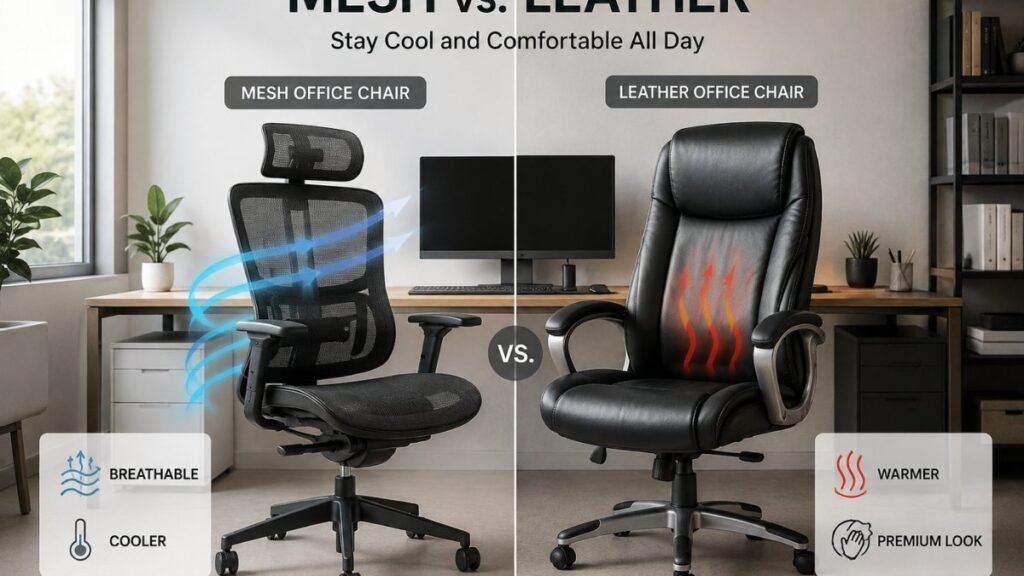
Mesh Office Chair vs. Leather Office Chair: Which Is Better?
Mesh is known for better airflow and all-day comfort, while leather is often chosen for its softer feel and executive appearance. Comparing them side by side makes it easier to decide which one fits your workspace, comfort preferences, and daily routine.
| Factor | Mesh Office Chair | Leather Office Chair |
|---|---|---|
| Breathability | Excellent | Poor to moderate |
| Comfort over long sessions | Stays cool, firmer support | Can feel warm after a few hours |
| Cleaning | Vacuum, spot clean | Wipe down, occasional conditioning |
| Durability | Good with quality mesh | Varies widely by leather grade |
| Appearance | Modern, minimalist | Traditional, executive |
| Maintenance | Low | Low to moderate |
Over an eight-hour workday, the practical difference becomes clear: mesh stays consistently cool and firm, while leather — especially lower-grade leather — tends to feel noticeably warmer by the afternoon, particularly in rooms without strong air conditioning. Leather, on the other hand, generally reads as more polished for client-facing or executive spaces.
Ergonomic Features Worth Paying For
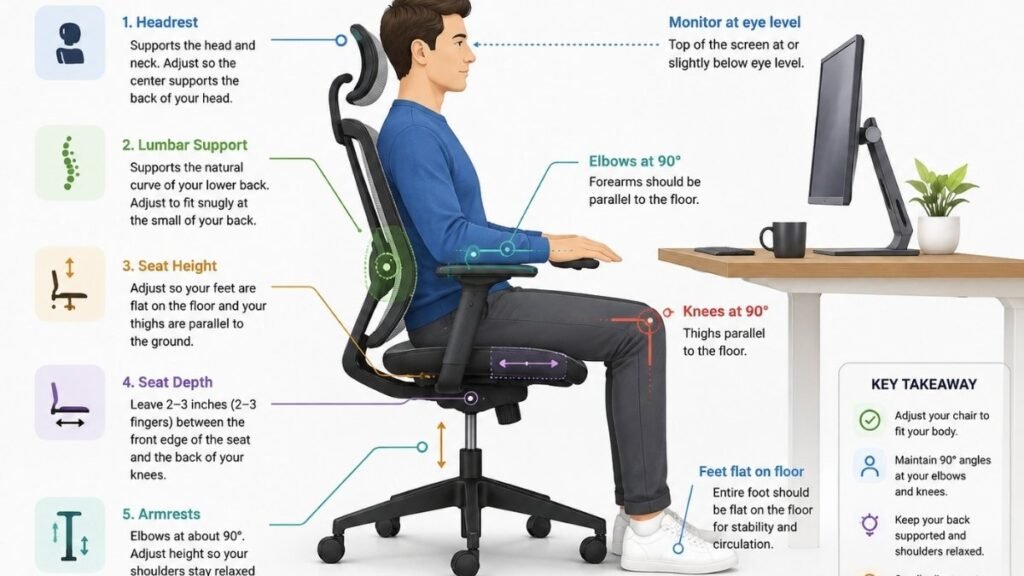
Knowing which adjustments matter most helps you choose a chair that fits your body instead of forcing your body to fit the chair.
Lumbar Support
Adjustable lumbar support that moves up, down, and sometimes in depth is far more valuable than a fixed curve, since it can match your specific lower back rather than an average body shape.
Seat Adjustments
Seat height and seat depth adjustment let you set your hips, knees, and elbows close to a 90-degree angle — the baseline position for reducing strain during long sitting sessions.
Recline Mechanisms
A recline with adjustable tension lets you lean back for a break without the chair feeling unstable or too loose. A tilt lock lets you hold a fixed upright position when focused on typing or reading.
Adjustable Armrests
3D or 4D armrests (adjusting height, width, depth, and sometimes pivot) reduce shoulder and neck strain far more effectively than fixed armrests, which often sit at the wrong height for your desk.
Headrest: Helpful or Optional?
A headrest is genuinely useful during recline breaks but isn’t essential for active, upright work — it’s a comfort feature rather than a core ergonomic requirement.
Essential Ergonomic Features Checklist:
- [ ] Adjustable lumbar support (not just a fixed curve)
- [ ] Seat height adjustment
- [ ] Seat depth adjustment
- [ ] Recline tension control with tilt lock
- [ ] Adjustable armrests (height at minimum, ideally width and depth too)
- [ ] Weight capacity matching your body weight with margin
A common misconception is that more cushioning or a thicker headrest automatically means more comfort. In practice, adjustable lumbar support does far more for all-day comfort than extra padding — a well-adjusted firmer chair will usually outperform a plush chair that doesn’t fit your body correctly. Pairing your chair setup with a wrist rest for keyboard and mouse can also reduce strain during long typing sessions, complementing the ergonomic support your chair provides.
Measure Your Workspace Before You Buy
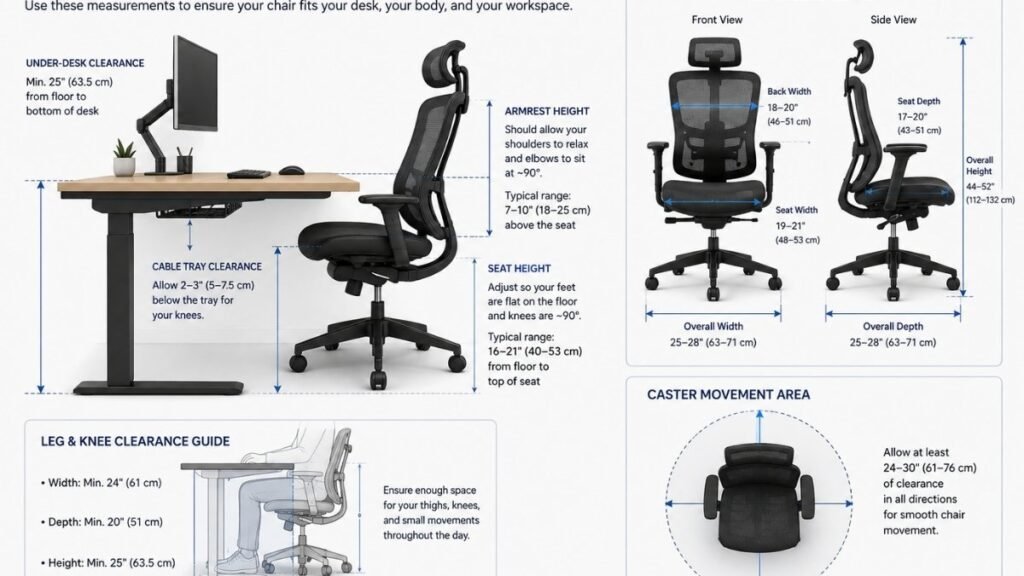
Checking desk clearance, available floor space, and armrest height only takes a few minutes, but it can prevent sizing problems and help you avoid an unnecessary return.
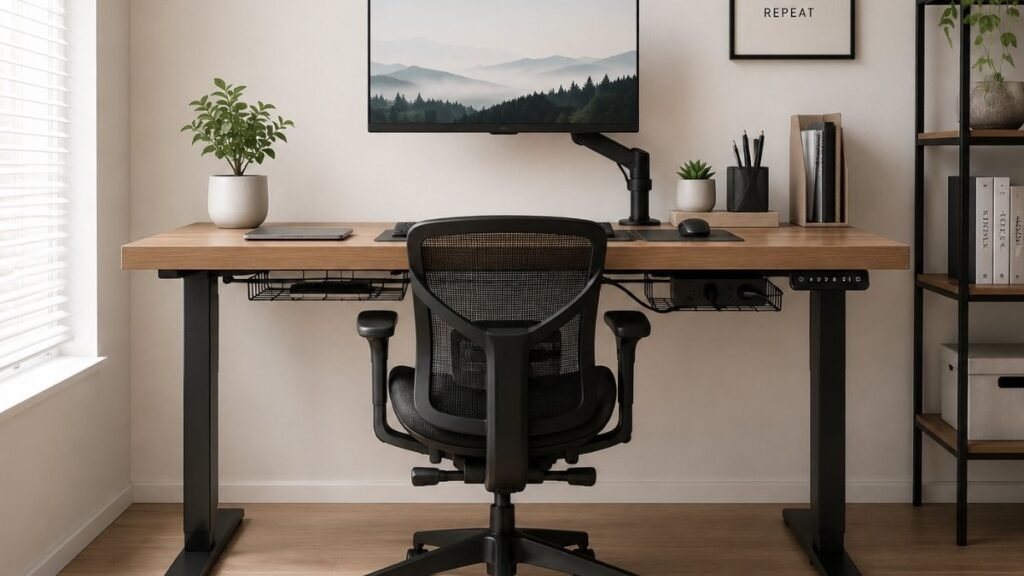
Measure Under-Desk Clearance
Measure from the floor to the underside of your desk, then compare it to the chair’s armrest height at its lowest setting. If the armrests are taller than your desk clearance, the chair won’t slide fully underneath.
Check Armrest Clearance
Beyond height, check the width of the armrests against your desk’s side panels or drawers, especially in smaller desk setups where space is tight on both sides.
Avoid Cable Management Interference
A wide chair base or low-hanging cables can get in the way of each other, especially in setups already using a footrest for desk positioning underneath.
Match Chair Size to Room Size
A large, high-back chair can make a small home office feel cramped, even if the desk itself is well organized.
Workspace Measurement Checklist:
- [ ] Measure desk underside clearance (floor to desk bottom)
- [ ] Check chair armrest height at lowest setting
- [ ] Confirm available floor space for chair base and wheel movement
- [ ] Check wheel/caster type matches your flooring
- [ ] Verify chair fits without blocking walkways or cable runs
It’s a common oversight for fixed, non-adjustable armrests to prevent a chair from sliding fully under a desk, leaving a visible gap that adds clutter to an otherwise clean setup. Checking this one measurement before buying avoids a frustrating surprise later.
Common Mesh Office Chair Problems (and How to Avoid Them)
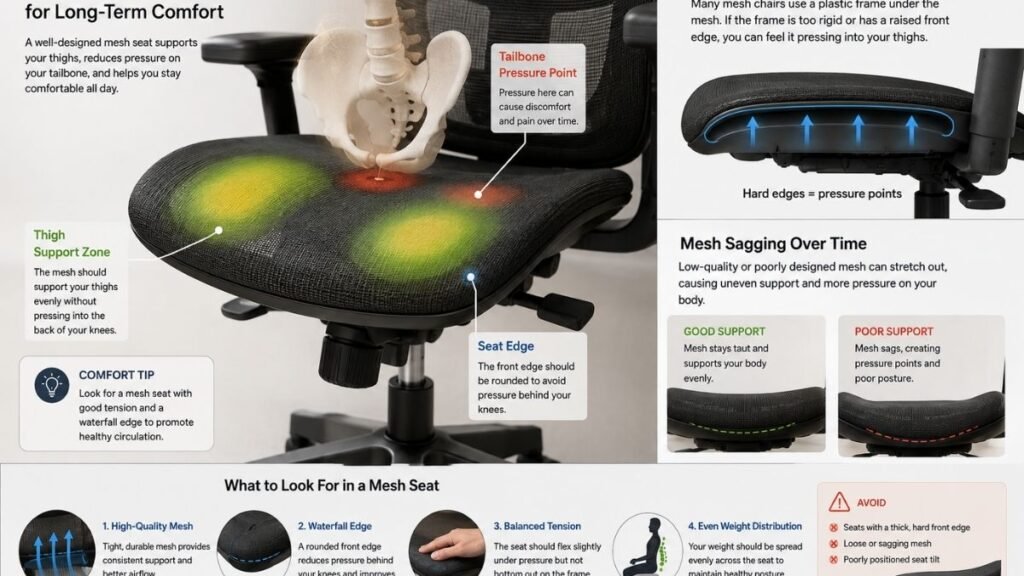
A mesh office chair can feel great during a quick showroom test, but everyday use often reveals problems that aren’t obvious at first. Weak mesh, poor lumbar support, and uncomfortable seat edges are among the issues buyers mention most
Why Mesh Chairs Sag
Lower-quality mesh loses tension faster under repeated daily pressure, leading to a noticeable dip in the seat or back after a year or two of regular use. This is usually a sign of thin, low-grade mesh rather than a design flaw.
How to Test a Mesh Chair Before Buying
If you can test the chair in person, sit in it for at least several minutes rather than a few seconds — pressure points and firmness are much harder to judge in a brief showroom sit.
Signs of Poor Mesh Quality
Thin mesh that stretches significantly under light pressure, uneven tension across the panel, or visible fraying at the seams are all early warning signs of a chair that won’t hold up long-term.
When to Skip Full Mesh
If you frequently experience tailbone discomfort or notice pressure across the back of your thighs, a foam seat may distribute pressure more comfortably than a fully mesh seat pan.
| Problem | Common Cause | Solution |
|---|---|---|
| Sagging seat or back | Low-quality, thin mesh | Choose reinforced, higher-tension mesh from established brands |
| Thigh pressure | Hard seat frame edge | Look for a waterfall seat edge or foam-seat hybrid |
| Tailbone discomfort | Insufficient seat cushioning | Consider a mesh-back with foam-seat design |
| Chair feels fine in store, uncomfortable at home | Short test sit | Test for at least 10–15 minutes, or check return policy |
A five-minute showroom sit rarely reveals how a chair performs across an eight-hour workday — pressure points and firmness issues tend to show up only after extended use. Checking the return policy before buying gives you a practical safety net if the chair doesn’t hold up the way you expected.
Best Mesh Office Chairs for Every Budget and Workspace
Choosing a mesh office chair becomes much easier once you narrow it down by budget and how you’ll use it. Whether you’re furnishing a small home office, working eight hours a day, or simply looking for the best value, focusing on the right category helps you avoid paying for features you don’t need.
| Budget Tier | Price Range | Best For | What to Expect |
|---|---|---|---|
| Budget | Under $200 | Light to moderate daily use | Basic mesh, limited adjustability |
| Mid-Range | $200–$500 | Full-time remote work | Higher-tension mesh, adjustable lumbar and armrests |
| Premium | $500+ | Long hours, heavy daily use | Reinforced mesh, extensive adjustability, higher weight capacity |
Best Budget Pick: A basic full-mesh chair with seat height and armrest adjustment covers the essentials without a big price jump.
Best Mid-Range Pick: A chair with adjustable lumbar support, seat depth, and 3D armrests offers the best comfort-to-price ratio for full-time daily use.
Best Premium Pick: Chairs with reinforced mesh, dynamic back support, and 4D armrests are worth the investment mainly for people sitting long hours, most days of the week.
Best for Home Office: A mid-range full-mesh chair with a compact base fits most home setups comfortably.
Best for Small Spaces: A chair with flip-up or low-profile armrests and a smaller five-star base.
Best for Heavy Users: Look specifically for chairs rated with a higher weight capacity and reinforced mesh, rather than assuming a standard chair will hold up the same way.
Spending more on a higher-quality mesh chair often reduces total cost over time, since low-grade mesh chairs frequently need replacing within two to three years, while a well-built mid-range or premium chair can last significantly longer.
Make the Most of Your Workspace with a Mesh Office Chair
Pairing it with the right desk layout, better cable management, and a few practical accessories creates a setup that’s easier to work in and simpler to keep organized every day.
Building a Minimalist Workspace
A properly sized mesh chair with a slim profile keeps sightlines open in smaller rooms, which makes the whole workspace feel less cluttered even without changing anything else.
Preventing Cable Tangles Under the Desk
Chair wheels and a wide base can catch on loose cables running along the floor. Keeping cables routed along the back or side of the desk, rather than the center, avoids this entirely.
Accessories That Improve Workspace Efficiency
Small additions like a footrest or wrist support don’t just add comfort — they also reduce the need to constantly adjust your chair position, keeping your overall setup more consistent and organized.
| Feature | Compact Workspace | Executive Workspace |
|---|---|---|
| Chair footprint | Small, low-profile | Larger, high-back |
| Cable visibility | Hidden, minimal | May be more exposed |
| Floor space used | Minimal | Significant |
| Best suited to | Small home offices | Larger private offices |
A properly sized mesh chair can make even a small, single-desk workspace feel noticeably more open and less cluttered — often more than any organizer or accessory on its own. It’s a detail that’s easy to overlook when chair shopping but noticeable once it’s fixed.
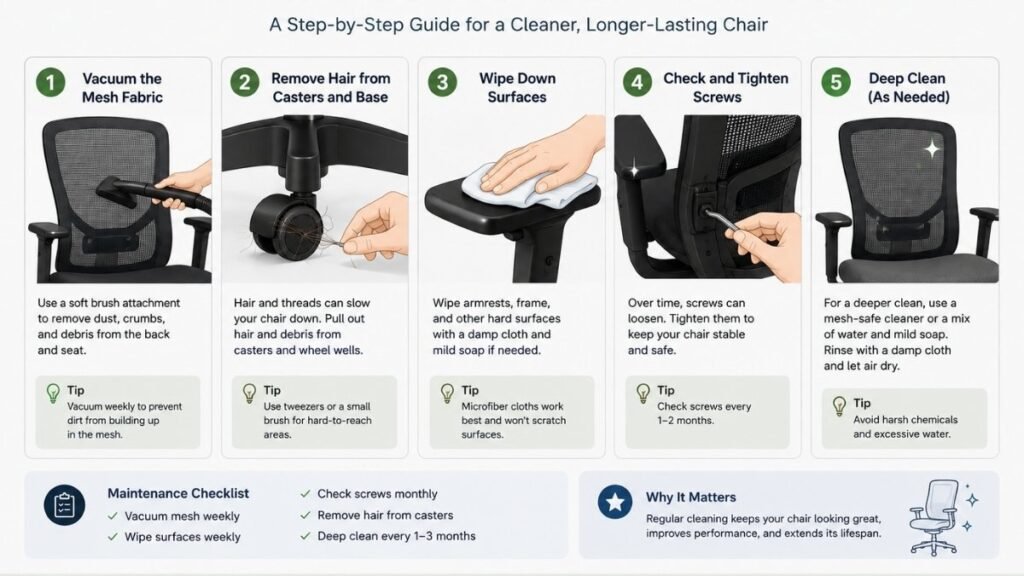
How to Clean and Maintain Your Mesh Office Chair
A quick cleaning routine and occasional maintenance can prevent dust buildup, keep the mesh in good condition, and help the chair stay comfortable and reliable for years of daily use.
Weekly Cleaning Routine
Vacuum the mesh surface with a soft brush attachment to remove dust and lint before it works its way into the weave. A quick wipe-down of armrests and the frame keeps the rest of the chair looking fresh.
Cleaning Casters
Hair and debris commonly wrap around caster wheels over time, which can make the chair harder to roll. Removing this buildup every month or so keeps movement smooth.
Preventing Mesh Wear
Avoid placing sharp objects or excessive weight on the mesh panel when it’s not in use, and keep the chair out of direct sunlight, which can weaken the fibers over time.
Monthly Maintenance Checklist:
- [ ] Vacuum mesh surface with a soft brush attachment
- [ ] Wipe down armrests, frame, and base
- [ ] Remove hair and debris from caster wheels
- [ ] Check mesh tension for early signs of sagging
- [ ] Tighten any loose bolts or recline mechanisms
Dust that settles into the mesh weave gradually reduces airflow and can make the chair look duller over time, even though the material itself hasn’t actually worn out. A quick weekly vacuum prevents this buildup before it becomes noticeable.
Frequently Asked Questions
Is a mesh office chair better than a leather or cushion foam chair for long hours of sitting? For long sitting sessions, mesh generally performs better in terms of temperature control and pressure distribution. Foam and leather can feel softer initially but tend to trap more heat over an extended workday. The better choice ultimately depends on your climate and personal comfort preference.
Why do some people experience thigh pain or leg numbness when sitting on a mesh seat? This is usually caused by a hard seat frame edge or insufficient seat depth adjustment, which puts pressure directly under the thighs. Looking for a chair with a waterfall seat edge or switching to a mesh-back with foam-seat design can help resolve this.
Should I choose a full-mesh office chair or a mesh-back chair with a foam seat? Choose full mesh if you prioritize breathability and firmer support, especially in a warm room. Choose a foam seat if you prefer softer cushioning or tend to sit cross-legged or shift positions frequently.
How do I prevent a mesh office chair from sagging over time? Choose a chair with high-tension, reinforced mesh from a reputable brand, and avoid excessive weight or pressure on the mesh when the chair isn’t in use. Regular light maintenance also helps preserve tension longer.
Are budget mesh office chairs from wholesale clubs like Costco worth buying? They can be a reasonable option for light to moderate use, though they typically use lower-grade mesh and fewer adjustment features than mid-range or premium models. For full-time daily use, investing slightly more usually pays off in comfort and longevity.
Does a high-back mesh chair with a headrest provide better neck and back support? A headrest can add comfort during recline breaks, but it isn’t essential for active, upright work. Adjustable lumbar support and proper seat height matter more for day-to-day back support than headrest height.
Are mesh office chairs suitable for heavy or big-and-tall users? Yes, as long as the chair is specifically rated for a higher weight capacity with reinforced mesh and a sturdier frame. Standard mesh chairs not designed for higher loads may sag or lose tension faster under heavier daily use.
How do you clean dust, lint, and hair out of a mesh office chair seat? A vacuum with a soft brush attachment is the most effective way to remove dust and debris caught in the mesh weave without damaging the fibers. Regular weekly vacuuming prevents buildup from becoming visible or affecting airflow.
Final Thoughts
The best mesh office chair is the one that fits the way you work—not just your budget. Choosing the right combination of ergonomic support, breathable materials, and practical features can make long hours at your desk feel noticeably more comfortable.
A chair is something you’ll use every day, often for years. Taking a little extra time to compare your options now can lead to better comfort, improved focus, and a workspace you’ll genuinely enjoy spending time in. When a mesh office chair fits both your body and your workspace, it’s an investment you’ll appreciate every time you sit down.
🪑 Workspace Notes: The Thinking Behind This Guide
Shopping for a mesh office chair can be surprisingly frustrating. Product pages often focus on sleek designs, premium materials, and long feature lists, but they rarely explain how a chair actually feels after eight hours of work—or which features genuinely improve comfort over time.
That’s why this guide focuses on the details that matter most when choosing a chair for everyday use.
This guide is built around three priorities:
- 🪑 Everyday Comfort — Breathability, ergonomic support, and long-term sitting comfort.
- 📏 Practical Buying Advice — Understanding seat design, adjustability, durability, and workspace fit before you buy.
- 💼 A Better Workspace — Choosing a chair that works well with your desk, your room, and the way you work every day.
Because the goal isn’t simply to buy another office chair.
It’s to create a workspace that’s comfortable enough to support your best work, day after day.
🖥️ Continue Building a Better Workspace
A comfortable mesh office chair is only one part of an efficient workspace. These guides can help you improve your desk setup, stay organized, and create a workspace that’s more comfortable to use every day.
- Keyboard Tray — Improve typing posture and free up valuable desk space for a cleaner, more ergonomic workspace.
- Office Chair Mat — Protect your floors while making it easier to move your chair smoothly throughout the day.
- Desk Setup Guide — Learn how to arrange your desk, monitor, keyboard, and accessories for better comfort and productivity.
- Leather Office Chair — Compare leather and mesh office chairs to find the option that best fits your workspace and working style.
❤️ A Final Note
A productive workspace isn’t created by buying more—it’s created by choosing what works best for the way you work.
At WorkDeskLab, we believe a well-organized desk can make everyday tasks feel easier, help you stay focused longer, and create a workspace that’s more comfortable to use. That’s why we share practical organization ideas, honest product recommendations, and workspace solutions designed for real offices, home offices, and everyday work.
Our mission is simple: to help you build a cleaner, smarter, and more efficient workspace—one practical improvement at a time.