
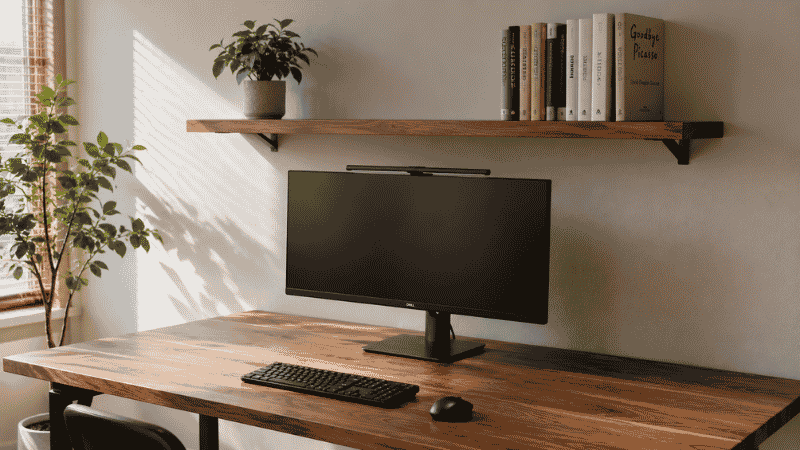
The desk is full. The floor around it is starting to fill in. The wall above it is empty.
That empty wall — or that unused vertical space directly above the desk surface — is the most common untapped storage opportunity in a home office. Most people stare at it for months before doing anything about it, partly because they’re not sure what to put there, and partly because they’ve seen setups where a shelf or hutch above a desk made the workspace feel cramped and cave-like rather than organized and open.
That reaction is valid. A poorly chosen desk hutch or an incorrectly positioned shelf can make a desk feel smaller, not more functional. But the right approach to above-desk storage — the right height, the right depth, the right amount of visual weight — does the opposite: it clears the desk surface, creates usable storage at eye level, and makes the workspace feel more intentional without making it feel more crowded.
This guide covers the difference between a desk hutch and a floating shelf, how to choose between them, what measurements actually matter, and the mistakes that make above-desk storage feel oppressive rather than helpful.
— Daniel Shaw, 7 years working from home, one poorly chosen desk hutch I replaced with floating shelves and never looked back
Key Takeaways
- A desk hutch sits directly on the desk surface; a floating shelf mounts to the wall above — they solve the same problem with different tradeoffs
- The bottom of any shelf above a desk should sit at least 18 to 22 inches above the desk surface to avoid feeling cramped — 24 inches is the comfortable target for most people
- Desk hutches add storage without requiring wall mounting; floating shelves free up more desk surface and feel more open but need wall anchoring
- Depth matters more than most buyers realize — a shelf deeper than 10 inches above a desk starts blocking natural light and creating visual pressure
- The desk bookshelf and desktop hutch categories solve storage problems; the mistake is buying one that’s too wide, too deep, or positioned too low
What Is a Desk Hutch? (And Is It Still Worth Considering?)
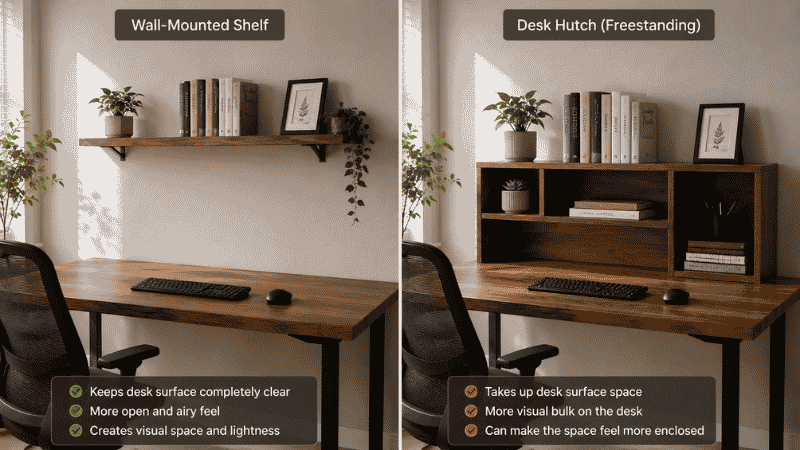
A desk hutch is a freestanding shelving unit that sits directly on the desk surface, typically at the back edge. It adds vertical storage — shelves, sometimes small cabinets or cubbies — using the space above the desk rather than the floor around it.
The traditional desk hutch from office furniture sets was wide, deep, and enclosed — essentially a bookcase that sat on the desk and surrounded the monitor with particleboard. These had a deservedly bad reputation for making workspaces feel like small enclosed rooms, and for blocking natural light from windows behind the desk.
The modern version is different. Current desktop hutches and desk shelves are typically narrower, shallower, and more open — wire frames, simple wooden platforms, or minimal tiered shelves that sit at the back of the desk and hold items vertically without blocking sightlines or natural light.
Whether a desk hutch makes sense depends on your specific situation:
- A desk hutch makes sense if: you can’t mount shelves to the wall (renter restrictions, wall type, no stud in the right place), you want storage that moves with the desk if you rearrange, or your desk is against a wall and you need book or document storage within arm’s reach
- A floating shelf makes more sense if: you can mount to the wall, you want the desk surface fully clear underneath, or the desk area is small and you need the visual openness that wall-mounted shelves provide
Shelf Above Desk: The Measurements That Actually Matter
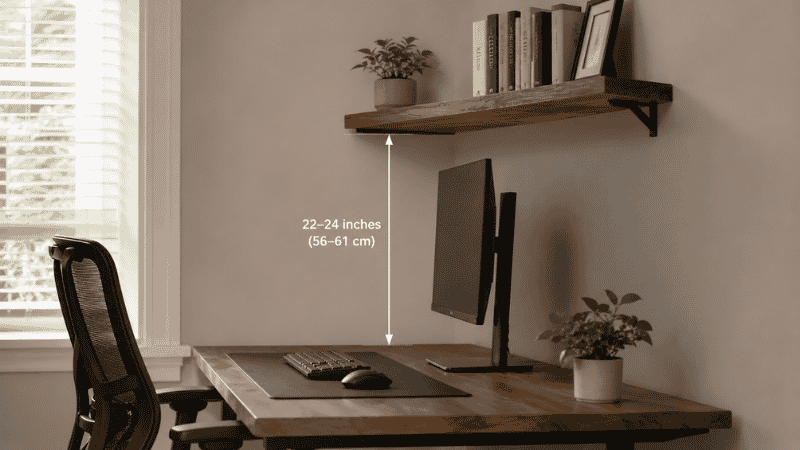
The most common above-desk storage mistake isn’t choosing the wrong product — it’s installing or positioning it at the wrong height. A shelf that sits too low turns a workspace into a box. A shelf at the right height feels like a natural extension of the desk.
Minimum clearance: 18 inches. The bottom of any shelf or hutch unit above the desk should be at least 18 inches above the desk surface. Below this, most people feel visually enclosed, and the space becomes difficult to use comfortably for a monitor or lamp.
Comfortable clearance: 22 to 24 inches. This is the target for most setups. At 24 inches of clearance, a standard monitor fits underneath with room for a lamp, a small plant, or other desk items without the shelf feeling like a ceiling.
Shelf depth: 8 to 10 inches maximum. Shelves deeper than 10 inches above a desk encroach into your visual field and block light. An 8-inch deep shelf holds books, files, and most office items without intruding. The instinct to buy deep shelves for more capacity works against you above a desk — shallower is better here.
Width: match the desk width or go narrower. A shelf that extends significantly wider than the desk draws the eye outward and makes the setup feel unbalanced. Either match the desk width approximately or go slightly narrower — centering a narrower shelf creates a more focused, intentional look.
Desk Shelf Options: What’s Available and What Works
The terminology in this category is inconsistent — “desk hutch,” “desk shelf,” “desktop organizer shelf,” “desk riser shelf” are sometimes used for very different products and sometimes for the same thing. Here’s what the main categories actually are and when each makes sense.
Desktop Hutch (Freestanding on Desk)
Sits on the desk surface, typically at the back. Available in everything from simple wire risers to wooden units with multiple shelves and small cubbies. The key variable is how open or enclosed the design is — open wire or minimal wooden frames feel lighter; closed-back wood units feel heavier and more enclosing.
Best for: renters, people who move their desk frequently, or situations where wall mounting isn’t an option. Also useful when you want storage that integrates directly with the desk surface (pens and small items at the back of the desk, books on the hutch shelf above).
What to avoid: units that are deeper than 12 inches, units with solid backs that block the wall behind them, and units that sit so wide they dominate the desk visually. The best desktop hutches are narrow enough that you can see past them.
Desk Riser Shelf
A simpler version of the desktop hutch — essentially a single elevated platform that sits at the back of the desk and raises items to a more accessible height. Common use: putting a monitor or laptop on the raised platform, using the space underneath for a keyboard, and putting frequently used items on a small shelf above the platform.
More minimal than a full hutch, and less visually dominant. Good for setups where the primary goal is organizing the desk surface rather than creating significant above-desk storage.
Monitor Shelf for Desk
A dedicated shelf that attaches to or sits alongside the monitor, typically off to the side, creating a small elevated surface for frequently used items — phone, small notebook, pen, sticky note pad. Keeps these items elevated and visible without cluttering the desk surface.
Useful when the main desk surface is organized but there’s no good place for the items you reach for constantly throughout the day. A small monitor-side shelf at a slightly elevated position brings them into easy reach without taking up main surface area.
Corner Shelf for Desk
A shelf that sits in the corner of an L-shaped desk or in the corner of a room where two walls meet behind the desk. Corner spaces are typically underused — a corner shelf reclaims this dead zone for book or supply storage without encroaching on the main working surface.
Specifically useful for L-shaped desk setups where the corner junction is otherwise wasted space.
Over Desk Shelving: When to Mount to the Wall Instead
If you can mount to the wall, floating shelves above the desk are almost always the better long-term solution. Here’s why:
Wall-mounted shelves don’t take up any desk surface. A desktop hutch, even a narrow one, claims some area at the back of the desk. A shelf mounted 22 to 24 inches above the desk surface uses wall space instead — the desk surface remains fully usable.
Wall-mounted shelves also feel more open. There’s nothing connecting them to the desk surface visually, which makes the workspace feel less enclosed even when the shelf is loaded with books and files.
The practical consideration: you need to hit a wall stud, or use appropriate wall anchors for your wall type. Most shelves above a desk carry moderate loads — books, files, small plants, office supplies — which is within the range of properly installed wall anchors for most drywall. Check your wall type and anchor rating before installing.
The 22-to-24-inch rule applies to wall-mounted shelves too. The bottom of the shelf should clear 22 to 24 inches above the desk surface. This keeps the shelf in the upper portion of your visual field rather than directly in front of you, which maintains the sense of openness that makes floating shelves work better than hutches in most rooms.
Desk Bookshelf: Organizing What Goes on the Shelf
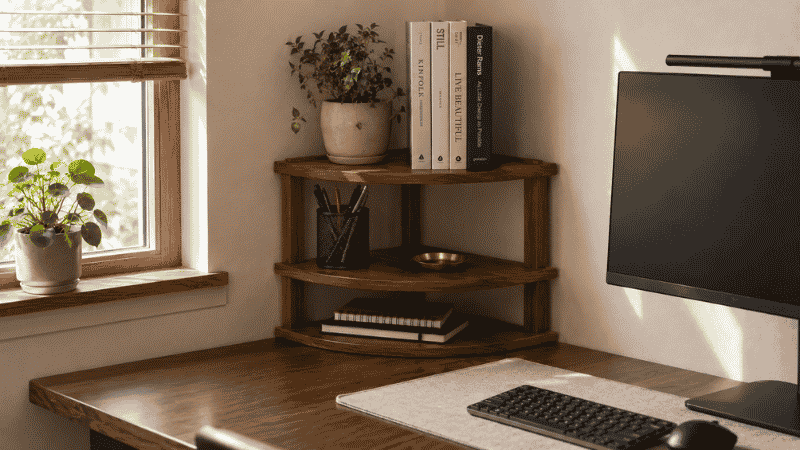
Getting the shelf or hutch in place is step one. What you put on it — and how you organize it — determines whether above-desk storage actually helps or just moves clutter upward.
The principle for above-desk storage: reference items, not active items.
Active items — the things you reach for constantly throughout the day — belong on the desk surface or in desk drawers. Books, manuals, files you reference occasionally, supplies in backup quantities, personal items like a small plant or a framed photo — these go on the shelf above. They’re accessible when needed but not occupying prime desk real estate.
A few organizational rules that prevent the shelf from becoming an elevated junk pile:
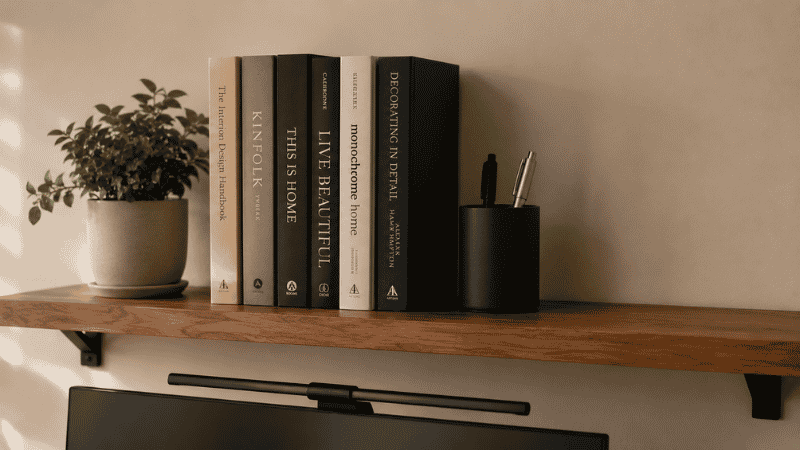
- Books spine-out, standing upright. Horizontal book stacks look messy and make individual books hard to retrieve without disturbing the others.
- One category per section. Books in one area, files in another, supplies in a small container in a third. Mixed categories on a shelf create visual noise even when the shelf isn’t overloaded.
- Leave some empty space. A shelf that’s packed to capacity looks cluttered even when everything on it is organized. Aim for 70 to 80% capacity — the empty space makes the organized items look more intentional.
- Nothing that requires daily retrieval. If you’re reaching for something on the shelf multiple times a day, it should move to the desk surface. Above-desk storage is for occasional-use items.
→ For the desk surface organization that works alongside above-desk storage: desk organization ideas that actually hold up.
The Desk With Shelf: Built-In vs. Add-On
Some desks come with a hutch or shelf built in — the shelf is part of the desk unit rather than a separate addition. These integrated desk-and-hutch combinations have specific tradeoffs worth knowing before buying a full desk setup.
Advantages of built-in desk hutches: Everything matches aesthetically, the hutch is specifically designed for the desk’s dimensions, and there’s no assembly gap between desk and hutch. Often more stable than a freestanding hutch placed on a separate desk.
Disadvantages: The desk and hutch are a single purchase — if you outgrow one or want to change it, you replace both. Many built-in hutches are designed for older office setups and position the shelves lower than is comfortable for a modern monitor-centric workspace. Check the clearance between desk surface and hutch bottom shelf before buying — some are designed for a monitor height that predates modern widescreen monitors.
The add-on approach (separate desk, separate shelf or hutch) is more flexible and usually more practical for a home office that will evolve over time.
What to Do If Your Above-Desk Storage Feels Cramped
If you’ve already installed a shelf or hutch and the workspace feels smaller rather than more organized, the issue is usually one of three things:
The shelf is too low. Raise it. Even 3 to 4 additional inches of clearance changes the feeling of the space significantly. If it’s a wall-mounted shelf, remount at a higher position. If it’s a desktop hutch sitting too low, replace it with a taller unit that positions the bottom shelf higher.
The shelf is too deep. A shelf that extends more than 10 inches out from the wall intrudes into your visual field in a way that feels enclosing rather than helpful. Replace with a shallower option or remove items from the front of a deep shelf so the visual depth is reduced.
The shelf is overloaded. Remove 20 to 30% of what’s on the shelf. The remaining items will look more organized and the shelf will feel less dominant in the space.
If You Only Have 10 Minutes to Improve Your Above-Desk Storage Right Now
Before buying anything: look at the wall above your desk. Measure from the desk surface to a point 24 inches up. That’s where the bottom of a shelf would sit. Hold a book up there and see how it feels — does it seem intrusive or natural? That test tells you more about whether above-desk storage will work in your specific space than any product photo.
If you already have a shelf or hutch that’s not working: remove everything from it, leave it empty for two days, and then replace only the items you actually reach for while at the desk. Whatever you didn’t miss during those two days doesn’t need to be within arm’s reach.
Frequently Asked Questions
What is a desk hutch?
A desk hutch is a shelving unit that sits on top of a desk, typically at the back edge, adding vertical storage above the desk surface. It may include open shelves, small cabinets, or cubbies, and is designed to use the vertical space above the desk for books, supplies, files, or personal items. Unlike a separate bookshelf, a hutch integrates with the desk itself — either as a built-in unit on a desk-with-hutch product, or as a freestanding desktop unit placed on a separate desk.
How high should a shelf be above a desk?
The bottom of the shelf should sit at least 18 inches above the desk surface, with 22 to 24 inches being the comfortable target for most people. At less than 18 inches, the shelf feels like a low ceiling and the workspace feels enclosed. At 22 to 24 inches, a standard monitor fits comfortably underneath and the shelf feels like a natural storage extension rather than an intrusion into the workspace.
Desk hutch vs floating shelf — which is better?
If you can mount to the wall, floating shelves are usually the better long-term solution — they don’t use any desk surface, feel more open, and are easier to adjust in height. Desk hutches (freestanding on the desk) make more sense for renters, people who can’t mount to walls, or those who want storage that moves with the desk. Both work well when sized and positioned correctly; both fail when they’re too deep, too low, or overloaded.
What should I put on a shelf above my desk?
Reference items you access occasionally rather than constantly: books, manuals, backup supplies, files for current projects, small plants, a few personal items. Active daily-use items (pens, notebooks, phone) should stay on the desk surface or in desk drawers — reaching up repeatedly for frequently used items defeats the organizational purpose of the shelf. The goal is to remove items from the desk surface to the shelf, not to add more items to your workspace overall.
How deep should a desk shelf be?
8 to 10 inches is the recommended depth for a shelf above a desk. Deeper shelves hold more but encroach into your visual field and start blocking natural light — the space feels more enclosed as depth increases. An 8-inch deep shelf holds most books, binders, and standard office supplies without the visual intrusion that comes with deeper options.
Is a desk with a hutch worth it?
It depends on the specific product. Older-style desk-and-hutch combinations often position the hutch bottom shelf too low for modern monitor setups, which creates the cramped feeling that gave hutches a bad reputation. More modern versions with higher clearance and open designs work well for home offices where storage is needed but wall mounting isn’t practical. Check the clearance between desk surface and hutch bottom shelf specifically — it should be at least 18 inches, ideally 22 to 24 inches.
Use What’s Already There
The space above your desk is probably the least used storage opportunity in your home office. A shelf or hutch at the right height — 22 to 24 inches of clearance, no more than 10 inches deep, sized to roughly match the desk width — turns that dead zone into useful, accessible storage without making the workspace feel smaller.
The desk surface stays clear. The floor stays clear. The items you need occasionally are within reach. That’s the whole goal.
More from WorkDeskLab:
- How to Set Up a Home Office That Actually Works
- Desk Organization Ideas That Actually Stick
- Under Desk Storage — How to Reclaim the Space You’re Wasting
- Home Office Layout — How to Arrange Your Workspace for Focus
References: Cornell University Human Factors and Ergonomics Research — Vertical storage ergonomics and reach zones in seated workstations (ergo.human.cornell.edu) · American Society of Interior Designers — Workspace storage height guidelines and visual comfort in home office environments (asid.org)