
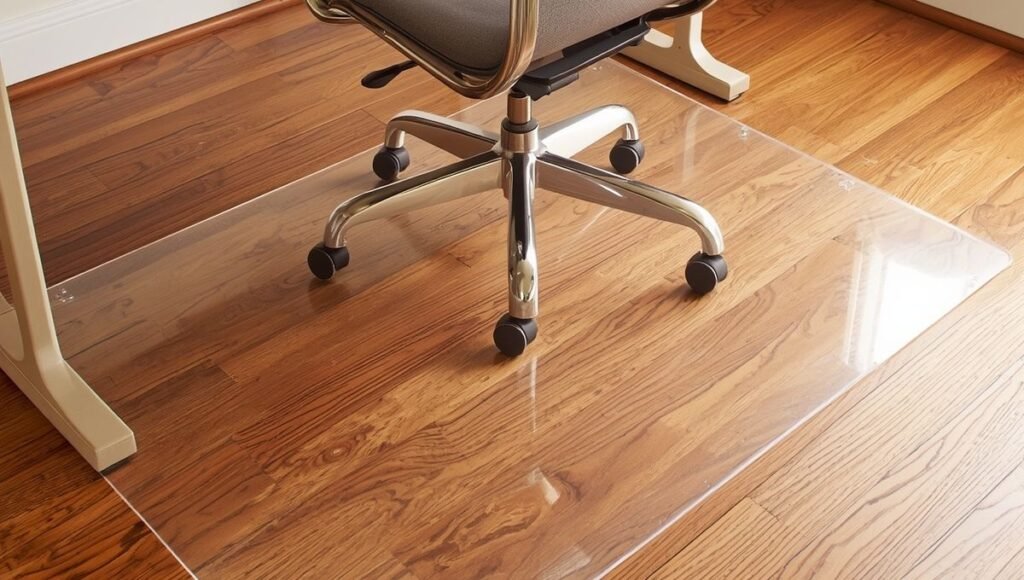
There’s a very specific moment that most home office workers know.
You’ve had the cheap plastic chair mat for about eight months. It started curling at the edges around month three, but you weighed it down with the chair and ignored it. Then one Tuesday afternoon you push back from your desk and feel it — a crack. Not dramatic, just a clean snap through the corner. By Friday there are three more. Within two weeks the mat is in pieces and you’re rolling your chair directly on the carpet or hardwood again, wondering whether you should buy another one or just skip it entirely.
This happens to most people who buy the entry-level clear plastic office chair mat. It’s not a quality control failure — it’s a design limitation. Thin PVC mats aren’t engineered for the sustained compression and flexion of a rolling office chair used daily. They’re priced like a temporary solution because they are one.
Whether you actually need a chair mat, which floor type determines which mat, and what the alternatives to cheap plastic look like — this guide covers all of it without assuming you want to spend $200 on tempered glass.
— Daniel Shaw, 7 years working from home, two cracked plastic mats before switching to something that actually lasted
Key Takeaways
- Whether you need a chair mat depends primarily on your floor type — carpet almost always benefits from one; hard floors benefit less but still gain floor protection and easier rolling
- The single most important chair mat specification: the backing type must match your floor — carpet mats have cleats/spikes that grip carpet fibers; hard floor mats have smooth flat backs that won’t scratch hardwood or tile
- Cheap PVC/polycarbonate mats crack because they’re not thick enough to handle the sustained compression of daily chair use — minimum 3mm thickness for hard floors, minimum 5mm for carpet
- For carpet, pile height determines which mat thickness you need — a mat designed for low-pile carpet will warp and crack on medium or high-pile carpet within months
- Glass and polycarbonate alternatives cost more upfront but last significantly longer — on a per-year cost basis, a $150 glass mat often costs less than replacing $30 plastic mats every 8–12 months
Do You Actually Need an Office Chair Mat?
The honest answer depends on two things: what floor you have and how much you care about it.
If you have carpet: Yes, almost certainly. A rolling office chair on carpet without a mat compresses the carpet fibers in the paths the chair travels most — under the desk, toward where you reach sideways. Over months, these paths flatten and discolor differently from the surrounding carpet. On medium and high-pile carpet, rolling without a mat is also significantly more physically effortful — you’re pushing through carpet resistance with every small adjustment, which adds up over eight hours. A mat creates a firm rolling surface and protects the carpet underneath.
If you have hardwood or laminate: The floor protection argument is the strongest one. Hard chair casters rolling repeatedly over the same paths create micro-scratches in hardwood and laminate finish. You won’t notice it happening — it accumulates invisibly — but after two or three years without a mat, the area under your desk will be visibly more scratched and worn than the surrounding floor. Refinishing hardwood costs $3–$8 per square foot; a mat costs a fraction of that and prevents the damage entirely.
If you have tile or concrete: Protection matters less — these surfaces are harder to damage. The rolling experience is already smooth. A mat here is mainly about comfort (softer underfoot) and aesthetics rather than floor protection. It’s optional in a more genuine sense than on carpet or hardwood.
The exception: If your office chair has soft rubber casters rather than hard plastic ones, the damage risk to hardwood is lower. Some people switch to soft-caster upgrades instead of using a mat — this is a legitimate alternative, particularly on hardwood where rolling without a mat is already easy.
Chair Mat for Carpet: The Type That Actually Grips
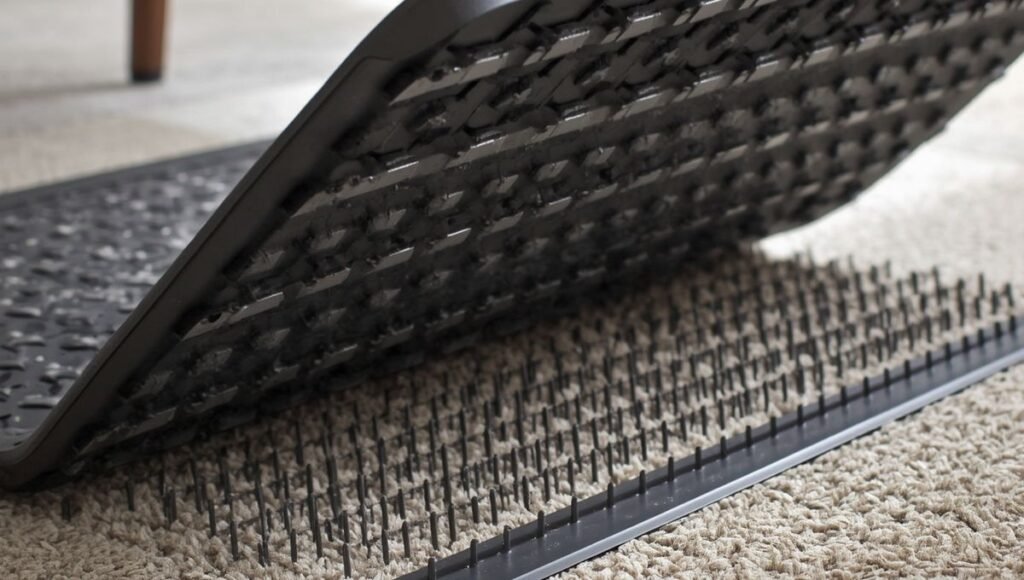
Carpet chair mats have cleats or spikes on the underside — small plastic protrusions that grip the carpet fibers and prevent the mat from sliding when you push back from the desk. This is the feature that makes carpet mats distinct from hard-floor mats, and it’s the most common source of buyer error: people buy a mat without checking whether it’s designed for their floor type, and end up with a smooth-backed mat that slides across the carpet, or a cleated mat on hardwood that sits at an uneven angle and scratches the floor.
The second critical variable for carpet mats: pile height. Carpet pile height determines which mat thickness and cleat depth you need.
- Low-pile carpet (thin, firm, typical commercial carpet): standard-thickness mat with short cleats. The most forgiving category — most entry-level carpet mats work here.
- Medium-pile carpet (typical home carpet): needs a thicker mat (at least 5mm) with medium cleats. Thin mats warp and eventually crack on medium-pile because they flex rather than staying rigid.
- High-pile or plush carpet (thick, soft home carpet): needs a premium-thickness mat (7mm+) with long cleats. This is where most cheap plastic mats fail fastest — they sink unevenly into the deep carpet, flex under chair pressure, and crack within months.
How to check your pile height before buying: press your hand flat on the carpet. Low-pile barely compresses; your hand stays near the surface. Medium-pile gives noticeably. High-pile your hand sinks in. Alternatively, measure with a ruler pressed to the carpet backing — under 1/4 inch is low-pile, 1/4 to 1/2 inch is medium, over 1/2 inch is high.
Editor’s note: The most frequent chair mat complaint online — “it cracked after a few months” — is almost always a combination of medium or high-pile carpet and a mat that wasn’t thick enough for it. The mat flexes into the carpet with every chair movement, and PVC that flexes repeatedly eventually cracks. Thicker mat on the correct pile height eliminates this almost entirely.
Chair Mat for Hardwood: Flat Back, No Spikes
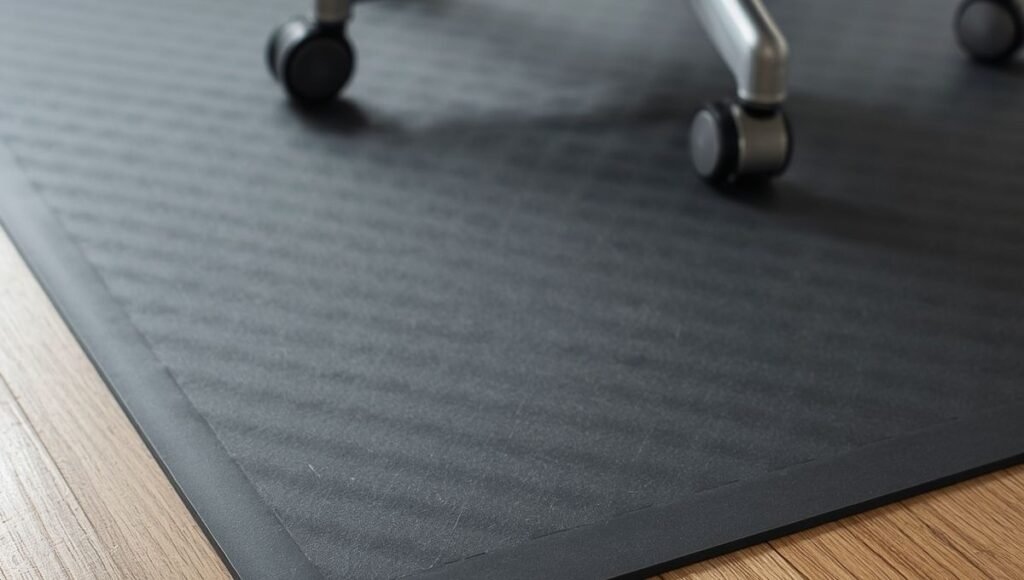
Hard floor chair mats have smooth flat backs — no cleats, no spikes, nothing that would create uneven contact with a hard surface. The smooth back distributes the mat’s weight evenly and protects the floor from the mat itself as much as from the chair.
The tradeoff: smooth-backed mats on hard floors can slide. The mat doesn’t grip the floor the way a cleated mat grips carpet. Most hard-floor mats compensate with a slightly textured or rubberized underside that creates friction without scratching, but this is less secure than the cleat system on carpet.
Practical solutions for mat movement on hardwood:
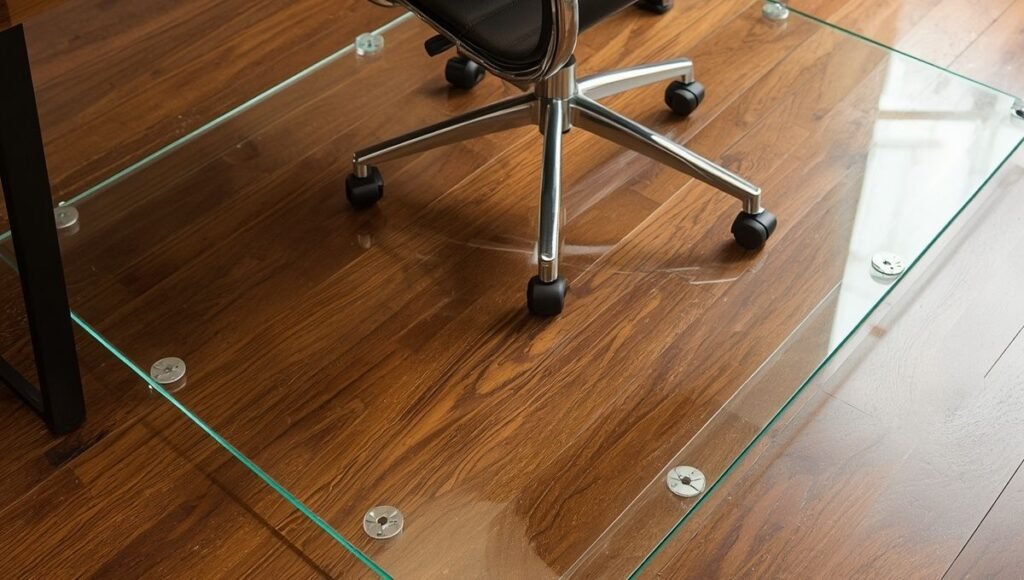
- Heavier mat material: Glass and thick polycarbonate mats are heavy enough to stay in place through inertia rather than friction. A thin PVC mat slides; a 3/4-inch glass mat doesn’t move.
- Non-slip pads: Small adhesive or non-adhesive furniture pads placed at the mat corners add friction without damaging the floor. Many glass mats include these.
- Mat size: Larger mats slide less than smaller ones — more surface area means more friction against the floor. A 36×48 inch mat is more stable than a 24×36 inch one.
One practical note on hardwood mats: clean underneath them regularly. Grit and debris that gets under a hard-floor mat is ground against the hardwood surface by the mat’s movement over time — doing more damage than the chair would have without the mat. Lift and clean underneath every few weeks.
Chair Mat Materials: Why Cheap Plastic Fails and What to Use Instead
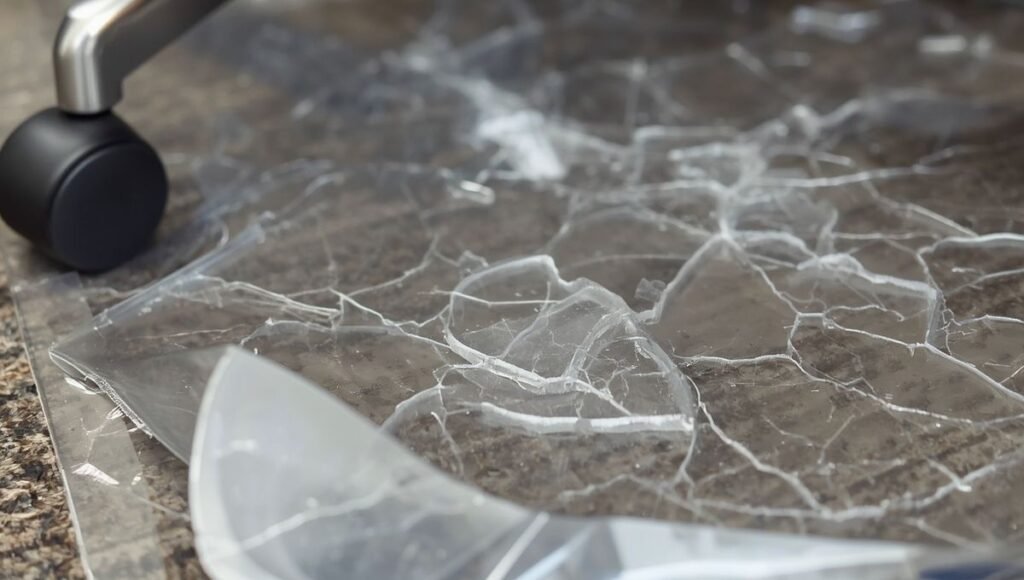
The material determines how long the mat lasts and how much it costs on a per-year basis.
PVC (cheap plastic): The standard entry-level mat. Cracks under sustained use, particularly on medium and high-pile carpet. Typically lasts 6–18 months with daily use. Cost per year is low upfront but accumulates with replacements. Prone to curling at edges, which becomes a trip hazard and rolling obstacle.
Polycarbonate: The mid-tier option. Significantly more durable than PVC, less prone to cracking. Can last 3–5 years with proper use (correct pile height match). More expensive upfront but better value over time. Available in clear or frosted finishes.
Tempered glass: The premium option. Virtually indestructible under normal office use — glass chair mats don’t crack from chair pressure, don’t curl, don’t yellow over time, and don’t need replacing. Provide an excellent rolling surface on any floor type. Very heavy (which is part of why they don’t slide). Initial cost is high ($100–$250 depending on size) but the per-year cost of a glass mat used for 10+ years is lower than replacing plastic mats every year.
Bamboo/wood: An aesthetic alternative that works well on carpet. Provides a firm rolling surface, looks significantly better than plastic, and holds up well. Limited to carpet use — wood mats on hardwood create the same scratch risk you’re trying to prevent. More expensive than PVC, less than glass.
Chair Mat Size: How Big Does It Need to Be
The mat needs to cover the full range your chair travels during a normal working session — not just the position directly in front of the desk, but the positions you roll to when reaching for items to the side, pushing back to stand, or adjusting during calls.
The standard recommendation: 36 inches deep by 48 inches wide covers most single-desk setups adequately. If your chair frequently travels more than 18 inches from the desk, go larger.
The “lip” configuration: many chair mats have an extension that fits under the desk — a lip that covers the floor under the desk itself where the front wheels rest when you’re sitting close. This prevents a visible difference in floor wear between the mat-covered area and the area under the desk. If your desk sits on carpet or hardwood, the lip prevents a patch of unprotected floor directly under the desk.
For L-shaped desks: standard rectangular mats rarely cover the full working area. Either use two mats (one per desk section) or measure the actual area traveled and order a custom-cut or oversized mat.
If You Only Have 10 Minutes and a Cracked Mat Right Now
If your current plastic mat has started cracking: don’t replace it with the same thing. The specific model failed because either it wasn’t thick enough for your carpet pile or you’ve simply gotten the value out of a PVC mat. Before buying a replacement, measure your carpet pile height and match the new mat’s thickness specification to it.
If you’re on hardwood and rolling is already easy: consider whether you actually need a mat at all, or whether caster upgrades (soft rubber casters instead of hard plastic) would serve the floor protection goal without the mat footprint.
If budget is the constraint but you want something that lasts: a mid-range polycarbonate mat correctly matched to your pile height will outlast multiple rounds of cheap PVC mats at a comparable total cost.
Frequently Asked Questions
Do I need an office chair mat?
On carpet: almost certainly yes — a mat protects the carpet from wear and provides a firm rolling surface that reduces physical effort. On hardwood or laminate: yes for floor protection, though the rolling experience is already smooth without one. On tile or concrete: optional — these surfaces resist damage better and rolling is already easy. The strongest argument for a chair mat on any surface is preventing floor damage that accumulates invisibly over years and is expensive to repair.
What is the best office chair mat for carpet?
The best carpet chair mat is one matched to your carpet’s pile height. For low-pile carpet: any standard polycarbonate mat with short cleats. For medium-pile: a thicker polycarbonate mat (5mm+) with medium cleats. For high-pile or plush carpet: a premium-thickness mat (7mm+) with long cleats, or a glass mat with carpet bumpers. Avoid thin PVC mats on medium and high-pile carpet — they crack within months because the carpet causes them to flex with every chair movement.
What chair mat should I use on hardwood floors?
A smooth-backed mat with no cleats or spikes. Cleated mats on hardwood sit unevenly and can scratch the floor. For hardwood, prioritize a flat, smooth underside and a material heavy enough to stay in place without sliding — glass or thick polycarbonate. Clean underneath it regularly to prevent grit from accumulating and being ground against the floor by the mat’s movement.
Why do chair mats crack?
Usually because the mat is too thin for the carpet pile it’s sitting on. On medium and high-pile carpet, a thin PVC mat flexes slightly with every chair movement as it sinks unevenly into the carpet. PVC that flexes repeatedly develops stress fractures — this is why cracking typically starts at the chair’s most-used positions. The fix is a thicker mat (polycarbonate or glass) that stays rigid rather than flexing under chair pressure.
How long does an office chair mat last?
Cheap PVC mats: 6–18 months with daily use. Mid-range polycarbonate mats: 3–5 years. Glass mats: 10+ years, effectively indefinite under normal office use. The per-year cost calculation often favors a better mat upfront — two or three PVC mat replacements can cost as much as one polycarbonate mat that lasts five years.
Match the Mat to the Floor
An office chair mat is a simple purchase made complicated by the number of ways the wrong one fails. Smooth back on carpet and it slides. Cleated back on hardwood and it scratches. Too thin for the pile height and it cracks. The right mat, matched to the right floor and pile height, requires almost no thought after purchase — it just sits there and works for years.
Check your floor type, measure your carpet pile if applicable, and choose the mat thickness accordingly. The rest is minor.
More from WorkDeskLab:
- How to Set Up a Home Office That Actually Works
- Desk Setup Guide — How to Build a Workspace That Actually Works
- Footrest for Desk — Do You Actually Need One
- Desk Accessories — What’s Worth Buying and What Isn’t
References: Flooring America — Hard floor maintenance and chair caster damage prevention guidelines (flooringamerica.com) · American Society of Interior Designers — Workspace flooring protection standards for home office environments (asid.org)
WorkDeskLab is reader-supported. If we recommend a product, we may earn a small affiliate commission at no extra cost to you. This never influences what we recommend. See our Affiliate Disclosure for details.